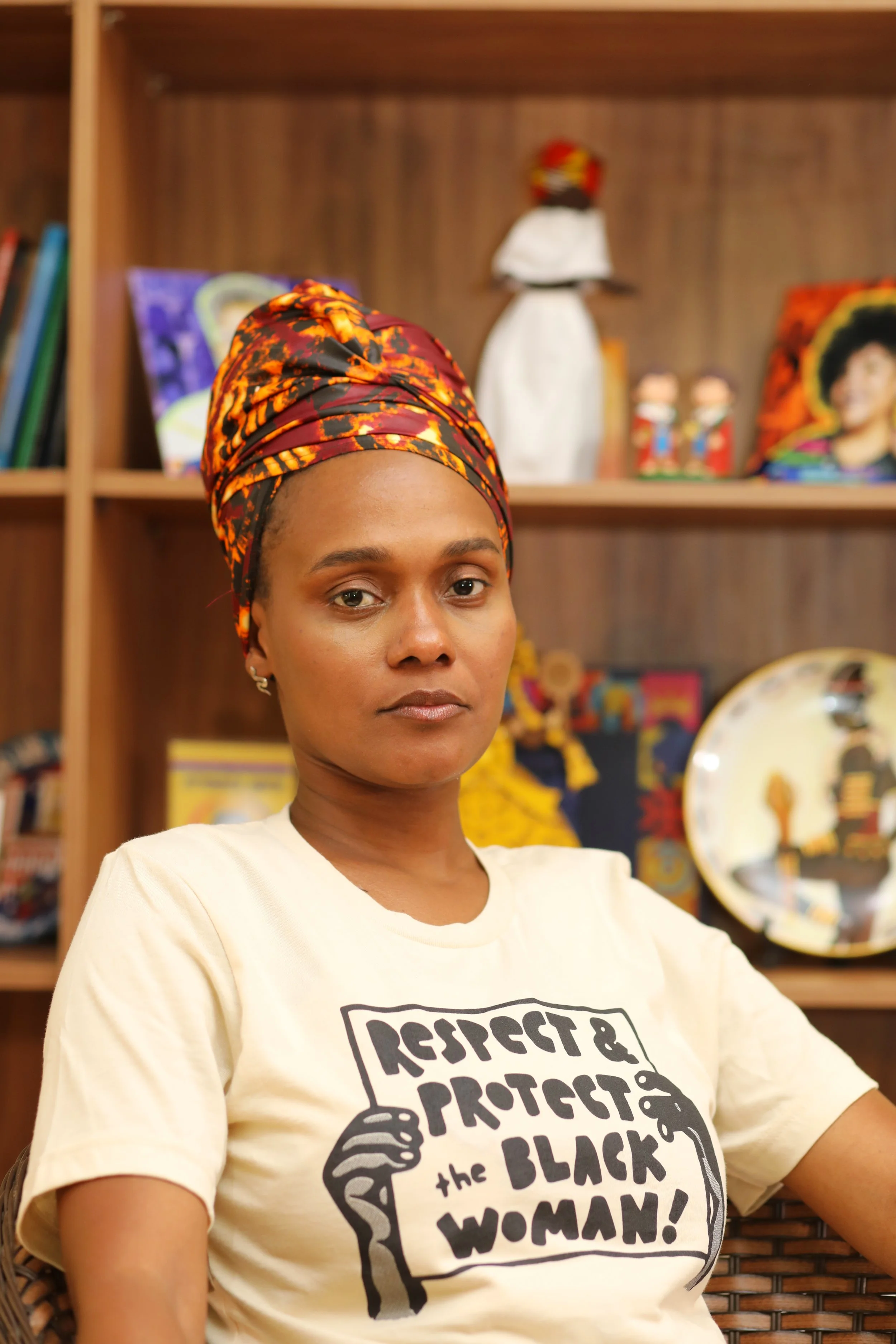
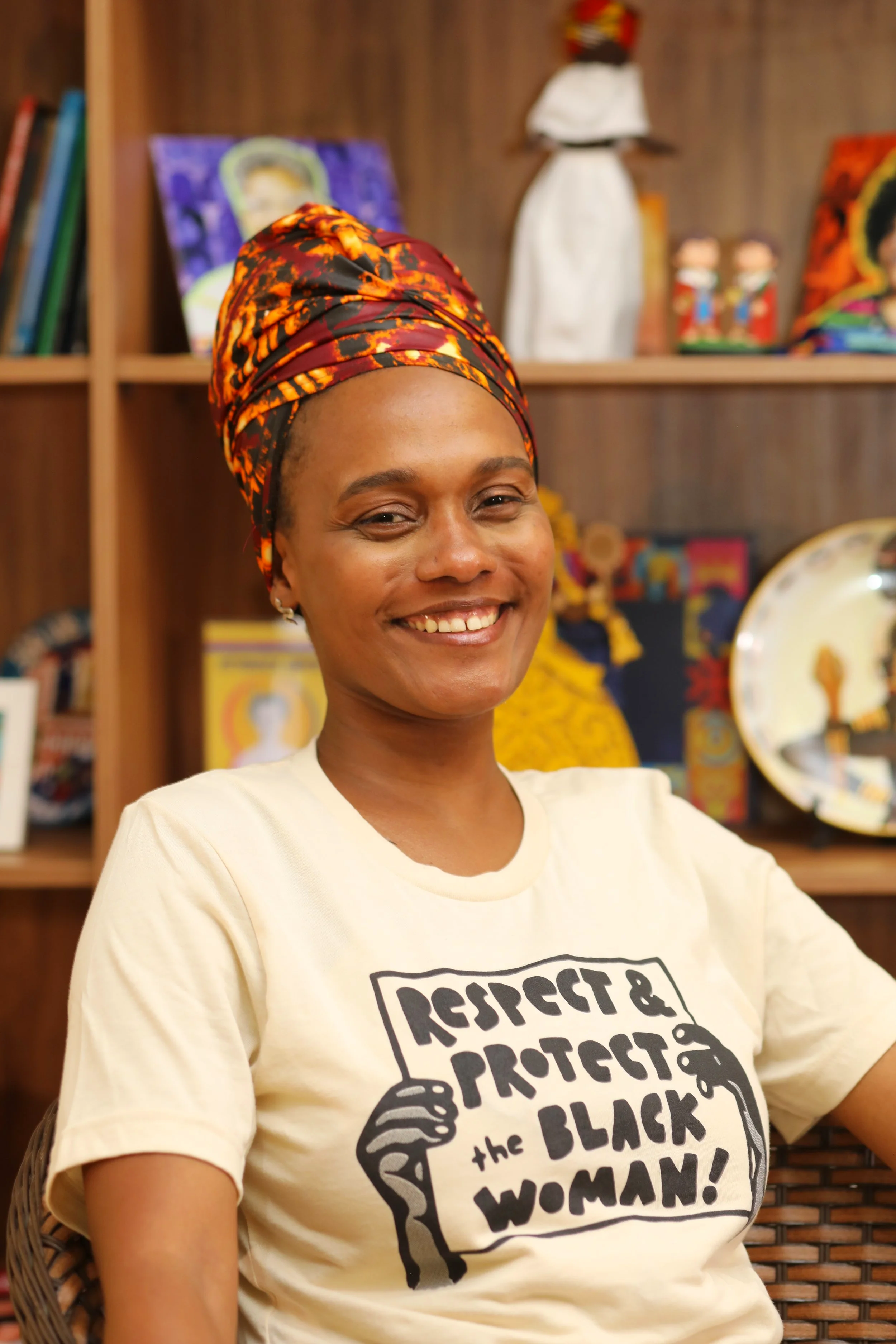
Erika Franciscais the Social Service Center Coordinator at Odara-Instituto da Mulher Negra. Prior to her position as Social Service Center Coordinator, from 2020 to 2024, Erika was the Project Coordinator of the Ayomide Project at Odara, which has a mission of centering Black girls and adolescents in the fight for the right to education. A young Black woman from the metropolitan region of Salvador, Erika is a Candomblé practitioner and holds a degree in Social Work from the Jorge Amado University Center (2017) and a specialization in Human Rights, Gender, and Sexuality from the Oswaldo Cruz Foundation.
Erika has been an activist in the Black Women’s Movement for 13 years. She was involved in the creation and structuring of the Rede de Mulheres Negras do Nordeste do Brasil (Black Women’s Network for the Northeast of Brazil) in 2013. She is an activist with the Articulação de Organizações de Mulheres Negras Brasileiras(AMNB) (Articulation of Organizations of Black Brazilian Women), where she participated in the organization of the first Black Women’s March against Racism, Violence, and Good Living in 2015. Through Odara-Instituto da Mulher Negra, she monitors the Ethnic-Racial Education Network of the Northeast region with teachers and managers of public education and the Education Working Group of Northeast Network of Black Women. She also represents Odara-Instituto da Mulher Negra on the Committee for Girls’ Policies in Salvador and at ABONG - Associação Brasileira Organizações Não Governamentais (the Brazilian Association of Non-Governmental Organizations).
Before coordinating the Ayomide Odara project, she coordinated Mulheres de Axé: Contra a Intolerância Religiosa e pela Democracia(Women of Axé: Against Religious Intolerance and for Democracy) (2015-2019), carried out training and advocacy actions with girls, young women and women of African-based religions with the aim of strengthening denunciations of religious racism in schools and gender-based violence. Between 2017 and 2018, she also coordinated a project to strengthen community networks for sustainable development in the peripheries of Salvador through a partnership between the Odara Institute and the Baobá Fund for Racial Equity.
Between 2017 and 2019, she was involved in structuring with the Coletivo Angela Davis Grupo de Pesquisa Ativista sobre Gênero, Raça e Subalternidades(The Angela Davis Collective, Activist Research Group on Gender, Race, and Subalternity) at the Federal University of Recôncavo da Bahia (UFRB), three editions of the Escola Internacional de Feminismo Negro Decolonial (International School of Black Decolonial Feminism), which included classes taught by activist and researcher Angela Davis and Kimberlé Williams Crenshaw.
Video Interview with Erika Francisca
In this video, Erika Francisca, Social Service Coordinator of Odara-Instituto da Mulher Negra, shared what reparation and good living mean to her as a global mandate for justice, solidarity, and freedom for Black women in Brazil and beyond.